

A Diabetic Foot Ulcer (DFU) is an open sore or wound that usually develops on the feet of people with long-standing or poorly controlled diabetes. If ignored, it can lead to serious infections and, in severe cases, amputation.
Early diagnosis and proper treatment can save the foot—and the patient’s quality of life. At Medisure Surgery Care, we specialize in limb salvage and advanced wound management.
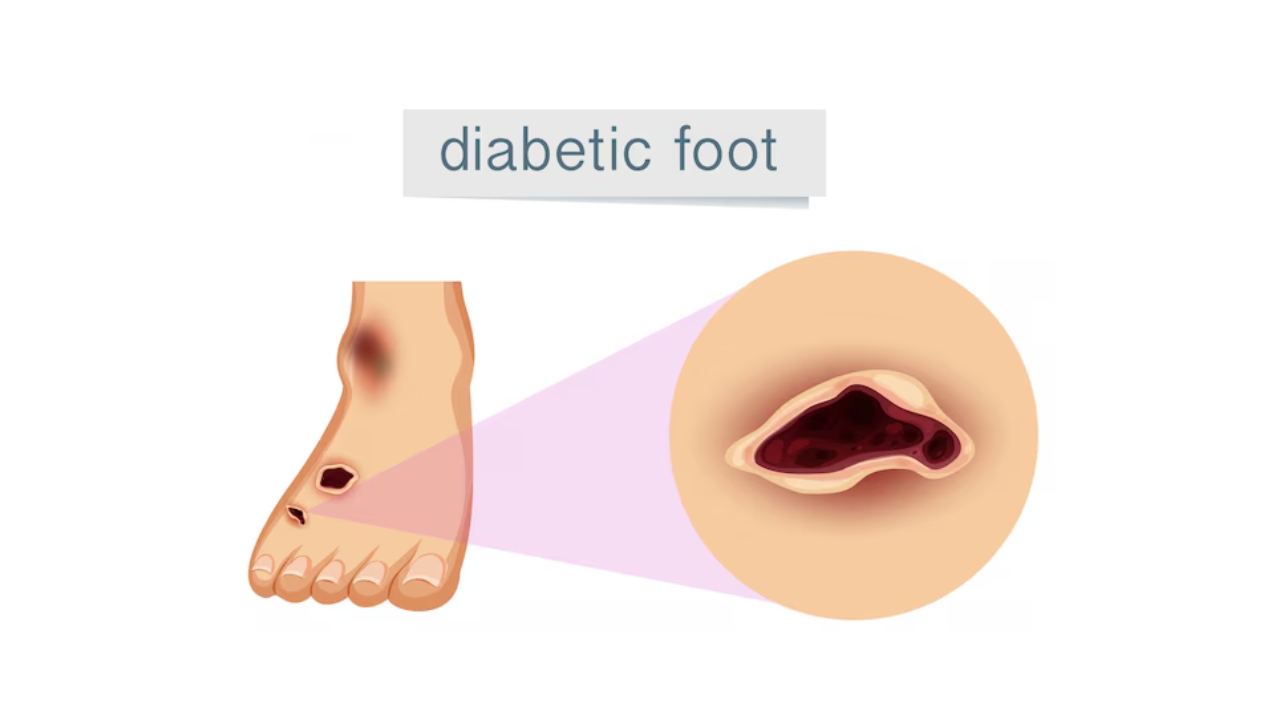
What Is a Diabetic Foot Ulcer?
A diabetic foot ulcer is a non-healing wound caused by a combination of factors including nerve damage (neuropathy), poor blood circulation, and repeated pressure on the foot. Because diabetes reduces pain sensation (sensory neuropathy), many patients don’t notice the wound until it becomes infected or severe.
Common Causes
- Peripheral Neuropathy: Loss of sensation makes it impossible to feel blisters or cuts.
- Poor Circulation: Narrowed blood vessels slow down the healing process.
- Uncontrolled Blood Sugar: High glucose levels feed bacteria and impair immune response.
- Foot Deformities: Changes in foot shape lead to abnormal pressure points.
- Ill-fitting Footwear: Tight shoes cause friction and skin breakdown.
Symptoms You Should Not Ignore
- Open sore or wound on the sole or toes.
- Swelling, redness, or unusual warmth in the foot.
- Pus or foul-smelling discharge on socks.
- Black or dead tissue (eschar) surrounding a wound.
- Unexplained fever or chills (signs of systemic infection).
Stages of Diabetic Foot Ulcer
Treatment Options
Wound Care & Off-loading
Regular cleaning, specialized medicated dressings, and the use of "off-loading" shoes or casts to take pressure off the ulcer are the first steps in healing.
Infection Control
Strict antibiotic regimens (oral or IV) are used to target bacterial infections and prevent them from spreading to the bone.
Surgical Treatment
- Debridement: Removal of dead or infected tissue to promote healthy skin growth.
- Abscess Drainage: Clearing localized infections.
- Vascular Surgery: Procedures to improve blood flow to the foot (Revascularization).
How to Prevent Foot Ulcers
- Check your feet every night for cuts, blisters, or redness.
- Keep blood sugar strictly under control.
- Never walk barefoot, even indoors.
- Wear seamless socks and well-padded diabetic shoes.
- Moisturize your feet (but avoid the area between toes).
When to See a Doctor?
👉 If a foot wound does not heal within 2–3 days.
👉 If you notice any drainage, odor, or black skin.
👉 If you have diabetes and notice any new change in foot appearance.
Why Choose Medisure Surgery Care?
We connect patients with expert surgeons who focus on Limb Salvage.
- ✔ Advanced wound & surgical care facilities.
- ✔ Major insurance coverage & No-cost EMI.
- ✔ Free Pick-up & Drop assistance for patients.